Serving South Alabama & North Florida: Baldwin, Mobile, Escambia, Santa Rosa Counties
The Ultimate Guide to Finding the Right Septic Installation Contractor near Mobile County, AL
Septic Installation in Mobile County, AL: What Homeowners Need to Know First
You’ve got a piece of land or a home that needs a septic system. You’ve heard stories about messy installs, surprise costs, and systems that fail right after the first big rain. If you’re feeling worried, you’re not alone. A septic system is a big purchase, and it touches your daily life. Toilets, showers, laundry—everything depends on getting this right.
From our side of the table, here’s the truth: good design and careful installation matter more than any brand name. In coastal Alabama, soil, water table, and stormwater can make or break your system. Our goal in this guide is to explain your options in plain English, help you compare contractors the smart way, and show you the steps to a clean, code-approved install that lasts.

How Septic Systems Work (Walkthrough for Mobile & Baldwin County Homes)
A septic system is simple at heart:
Wastewater leaves your home and flows into a buried tank.
Solids settle at the bottom; oils float to the top.
Partially treated water leaves the tank and moves to a drain field (also called leach field).
Soil does the final cleaning. The water filters through sand, loam, or engineered media and returns safely to the ground.
If your home sits low, your soil drains slowly, or your lot is tight, you may need pumps, an aerobic unit, or a different drain field style. The system should match the land—not the other way around.
Soils, High Water Tables, and Hurricanes: Coastal Alabama Factors That Change Your Design
Our area brings special challenges:
Sandy soils drain fast, which can be good, but they can also allow untreated water to move too quickly unless the field is sized right.
Clay pockets drain slowly and may need chambers or raised fields.
High water tables (common after heavy rains or storms) require careful depth and, sometimes, aerobic treatment to protect groundwater.
Hurricanes and soaking storms add stress. A well-built system includes correct elevations, secure lids, and drainage planning around the field.
A one-size-fits-all design doesn’t work here. Your installer should talk about soil maps, high-water marks, and recent rain history—not just price.
Perc Tests and Site Evaluations: What to Expect Before You Get a Quote
Before numbers get thrown around, you need a site evaluation. That usually includes:
Perc test or soil evaluation: Measures how quickly water drains in your soil and at what depth.
Setbacks and boundaries: Wells, property lines, waterways, and structures all have required clearance.
Home usage: Number of bedrooms and fixtures affects tank size and field capacity.
Access: Can equipment reach the site without tearing up driveways or trees you want to keep?
When we do site visits, we walk the land with you, flag the likely locations, and explain trade-offs. Clear info up front avoids costly changes later.
Septic Permits in Mobile County, AL: Who Approves What and Why It Matters
In Alabama, residential septic systems require approval before installation. Local health authorities review soil conditions, design, and layout. The permit protects you, your neighbors, and your groundwater. A good contractor helps prepare the paperwork, coordinates inspections, and makes sure the plan on paper matches what’s built in the ground.
If a contractor shrugs off permits or inspections, that’s a red flag. You want your system on record, approved, and inspected.
Conventional vs. Aerobic Septic Systems: Which Fits Coastal Alabama Best?
Conventional systems (tank + gravity drain field) work well when soil drains at a steady rate and the water table sits deep enough. They’re simple, quiet, and low-maintenance.
Aerobic systems add oxygen to the treatment process using a powered unit. They’re great for small lots, tough soils, and high water tables because they treat water more aggressively before it reaches the field. They do require electricity and routine service.
Rule of thumb: If your site is straightforward, conventional may be best. If your site is tight, wet, or complex, aerobic gives you flexibility and protection.
Concrete vs. Poly Tanks: Pros, Cons, and Lifespan in Gulf Coast Conditions
Concrete Tanks
Pros: Heavy, stable, long-lasting, less likely to float in a flood when installed properly.
Cons: Heavier to set, can crack if mishandled, needs proper sealing.
Poly (Plastic) Tanks
Pros: Lightweight, won’t corrode, quick to install.
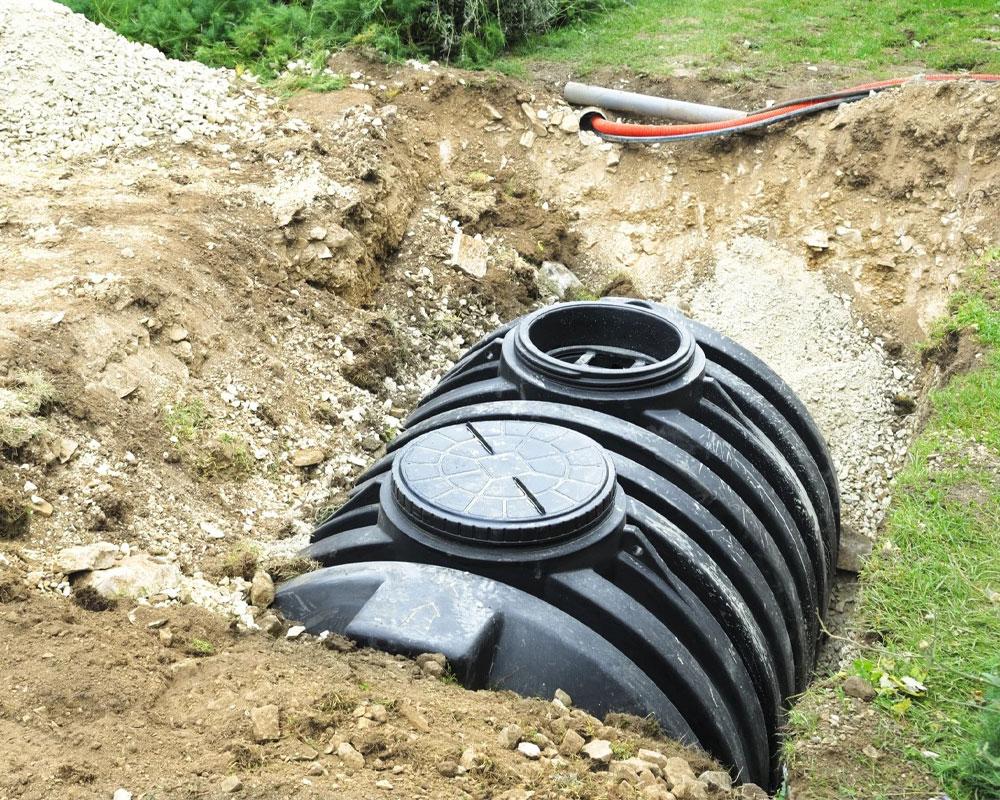
Cons: Must be anchored correctly in high water table areas to prevent floatation; requires careful backfill.
Your site conditions and groundwater level drive the choice. We install both. The “best” tank is the one properly sized, properly set, and properly sealed for your soil and water table.
Drain Field Options (Chambers, Gravel, Drip): Choosing the Right System for Your Soil
Gravel Trenches: Classic and durable when space allows.
Chamber Systems: Plastic arches that replace gravel—faster to install and great for sandy or mixed soils.
Drip or Low-Pressure Dosing: Used for tricky soils or slopes; spreads flow evenly to protect the field.
The right option depends on testing, lot layout, and how much you want to protect landscaping or trees.
Realistic Septic Installation Costs in Mobile County: What Drives the Price Up or Down
We know price matters. Here’s what changes the number:
System type: Conventional vs. aerobic.
Soil/Water table: Tough soils or high water tables need more materials and engineering.
Size: More bedrooms = larger tank and field.
Access and site work: Clearing, grading, and driveway protection add cost.
Permits and inspections: Required fees and coordination time.
Pumps, alarms, risers, filters: Small items that add reliability—and line items.
A good estimate spells out each part so you can see where your money goes.
The Septic Contractor Shortlist: How to Vet Licenses, Insurance, and Local Experience
When you’re picking a contractor, check:
Active license and insurance (and worker’s comp if they have a crew).
Local experience with coastal soils and storm planning.
Clear scope in writing: tank size, field type, elevations, restoration.
Change-order policy if conditions differ from the plan.
Communication style: Do they return calls? Do they explain in plain language?
The contractor who listens well will build a system that fits your home and habits.
Questions to Ask Before You Hire a Septic Installation Contractor in Mobile County
What systems do you install most often in high-water-table areas?
How will you protect my driveway, trees, and landscaping?
What tank size and drain field type do you recommend for my soil—and why?
Will you handle permits and inspections?
What happens if we hit unexpected soil or groundwater?
How do you anchor tanks in flood-prone zones?
What are my maintenance requirements (especially for aerobic)?
Do you include risers and effluent filters?
What’s the warranty on workmanship and materials?
Can I see recent local jobs or references?
Red Flags and Costly Mistakes: How to Avoid Bad Installs and Failed Inspections
Vague bids with no drawing or elevation info.
“We don’t need permits.” (You do.)
Too-small tanks “to save money.”
Skipping soil work or ignoring water table notes.
No plan for rain events during construction.
If something feels rushed or unclear, slow down. A week of planning beats years of repairs.
Timeline and Scheduling: From Bid to Final Inspection in Coastal Alabama
A normal schedule looks like this:
Site visit & soil info (a few days).
Design & permit (varies by county and complexity).
Mobilization & excavation (1–3 days for most jobs).
Tank and field install (1–2 days, weather dependent).
Inspection & backfill (same day or next business day after install).
Final grading & site restoration (1 day, plus settling time).
Weather can shift dates. A contractor who watches the forecast protects your yard and the new system.
Warranties, Service Plans, and Maintenance: Protecting Your Investment for the Long Term
Ask for workmanship warranties and manufacturer warranties on tanks, pumps, and control panels. Aerobic systems need routine service (filter cleaning, air pump checks). We also talk about effluent filters, risers, and alarms—low-cost parts that save you from big headaches later.
Your job: pump on schedule, keep vehicles off the field, and fix downspouts or surface water that runs toward the system.
Financing and Payment Milestones: Smarter Ways to Budget Your Septic Project
A fair payment plan might look like:
Deposit to secure permits and materials.
Progress payment after tank set and rough-in.
Final payment after inspection and restoration.
If you’re considering financing, choose simple terms and no surprises. Your contractor should be transparent about what’s included.
Reading Local Reviews the Right Way: What Mobile & Baldwin County Homeowners Report
Reviews help, but read them with a filter:
Look for mentions of communication and how crews handled rain or soft ground.
Check for photos of finished grading and neatness.
Notice how the contractor responds to issues—everyone hits challenges; pros fix them.
Case Studies: What a Well-Designed Coastal Alabama Septic System Looks Like
Tight Lot, High Water Table: We used an aerobic unit with low-pressure dosing and a compact field. The owner gained a reliable system without losing their backyard.
Sandy Soil, Big Family: We upsized the tank, used chambers for consistent distribution, and added risers for easy service. After storms, everything stayed put and performed as designed.
The pattern is simple: fit the design to the land and the people who live on it.
DIY vs. Hiring a Pro: When to Save Money—and When Not To
Some prep—like clearing small brush or marking utilities—can save time. But tank setting, elevations, inspections, and tie-ins are not DIY jobs. One missed detail can make a system fail or void approvals. If you want to help, talk with your installer about safe tasks you can take on.
Why Local Matters: The Advantage of a Coastal Alabama–Based Septic Installer
Local teams understand:
Soil quirks from Gulf Shores to Saraland.
Seasonal water-table swings and hurricane prep.
County requirements and how to streamline inspections.
You want a partner who will still answer the phone years from now.
About Coastal Mulching & Clearing, LLC: Customized Septic Solutions for Mobile County and Beyond
We’re based in Foley, Alabama and serve Baldwin County, Mobile County, Escambia County (AL), and Santa Rosa County (FL). Our approach is simple: listen first, design to your land, build clean, and leave your place looking right. We plan for rain, protect your driveway and yard, and set you up with a system you can maintain without stress.
Next Steps: How to Request a Site Visit and Get a Precise Septic Quote
Call for a short consult. Tell us about your property, bedrooms, and any time constraints.
Schedule a site walk. We’ll review soils, elevations, and layout options together.
Get a clear plan and price. You’ll see tank size, field type, permits, timeline, and what’s included.
Pick a start date. We coordinate inspections, handle weather windows, and keep you updated.
Bottom line: The right septic contractor doesn’t just dig. They design for your soil, plan for storms, and communicate every step. If you want a system that works on day one—and still works after the next big rain—choose a team that treats your yard like their own.
Ready to talk through your site? We’re here to help you choose the right system, protect your budget, and get the job done cleanly.
